

Morton's Neuroma Surgery
Morton's Neuroma Surgery
If you are researching Morton’s neuroma surgery, you may be considering an operation because other treatments have not worked or because surgery is the only option you have been offered. Before making a decision, it is important to understand all the available treatment routes. For a Morton’s neuroma that has not previously been operated on, open surgery may not be the first or only option.
At The London Podiatry Centre, our experienced clinical team offers a comprehensive range of treatments, from non-surgical and minimally invasive procedures through to open surgery within our CQC-registered facility. Following a detailed assessment, we will explain the appropriate options and recommend a personalised treatment plan based on your individual condition and needs.
Do you actually need surgery for Morton's neuroma?
Traditional open surgery for Morton's neuroma has long been viewed as a last resort, and for good reason. Removing or releasing the nerve is effective for many patients, but it carries a meaningful risk of complications — including persistent pain after the operation, permanent numbness in the toes, and the formation of a new, painful "stump neuroma" where the nerve was cut. Post-surgical pain can be harder to treat than the original problem.
For these reasons, a neuroma that has never been operated on can very often be treated effectively without open surgery at all. The decision should always follow a thorough assessment — which may include ultrasound imaging and, where appropriate, 3D gait analysis to identify the true cause — rather than jumping straight to an operation.
The types of Morton's neuroma surgery
When open surgery is the right course, there are two main approaches:
Decompression surgery releases the tight structures around the nerve — typically the intermetatarsal ligament — to create more space and relieve the pressure irritating it. The nerve itself is preserved. This is generally considered for earlier or less severe presentations.
Neurectomy removes the affected section of nerve entirely. It is the more commonly performed operation and can give lasting relief, but because the nerve is removed it leaves an area of permanent numbness, and there is a recognised risk of a stump neuroma developing at the cut end.
The procedure is usually carried out as a day case through a small incision on the top of the foot, with recovery in a stiff-soled post-operative shoe over the weeks that follow.
The minimally invasive alternative: cryosurgery
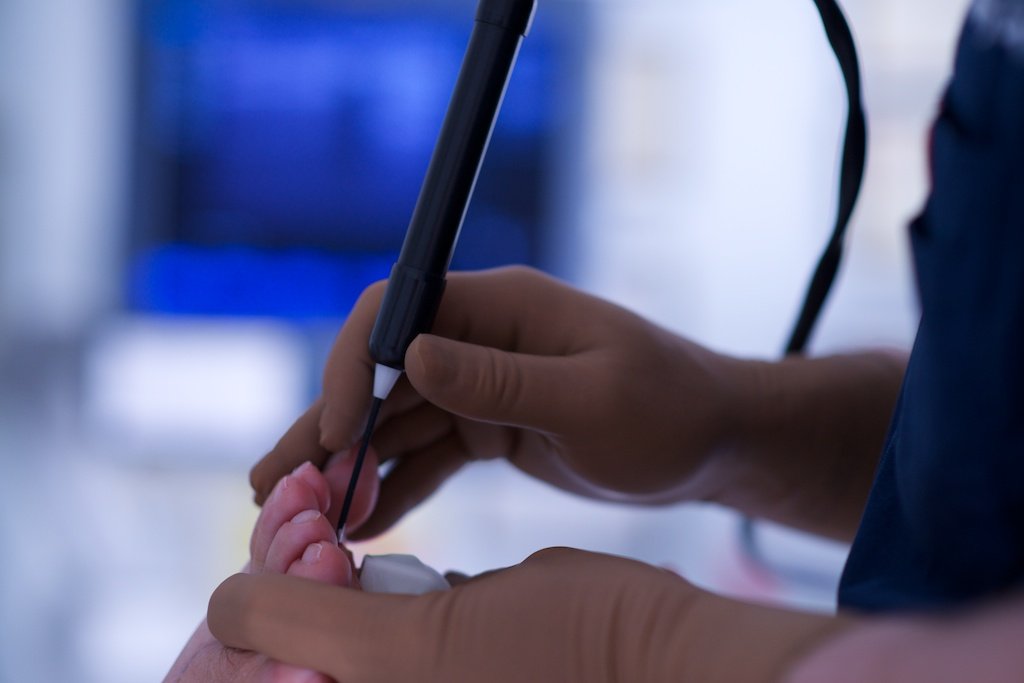
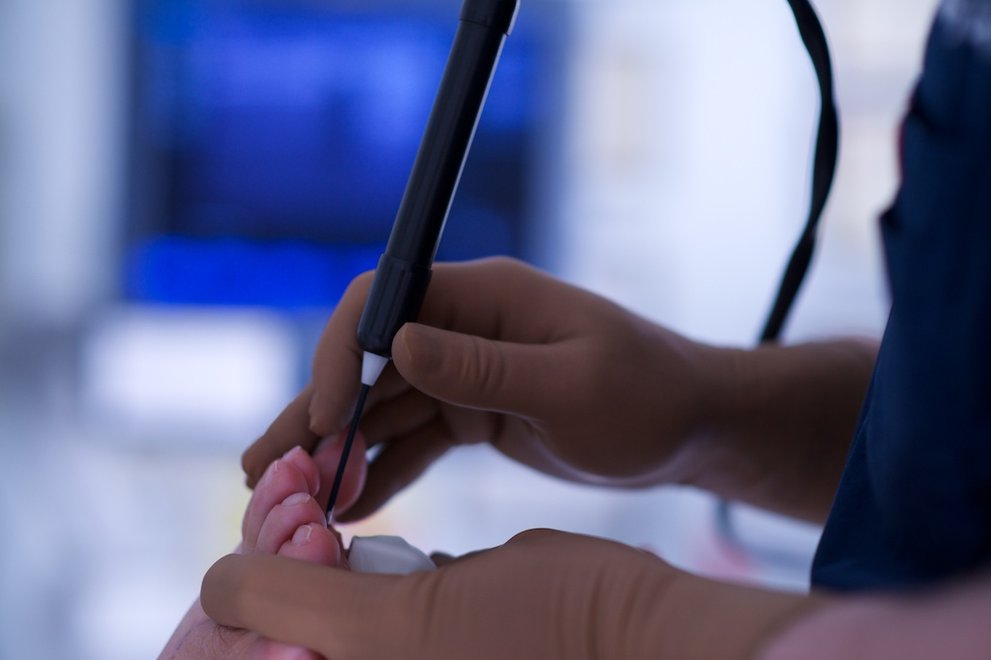
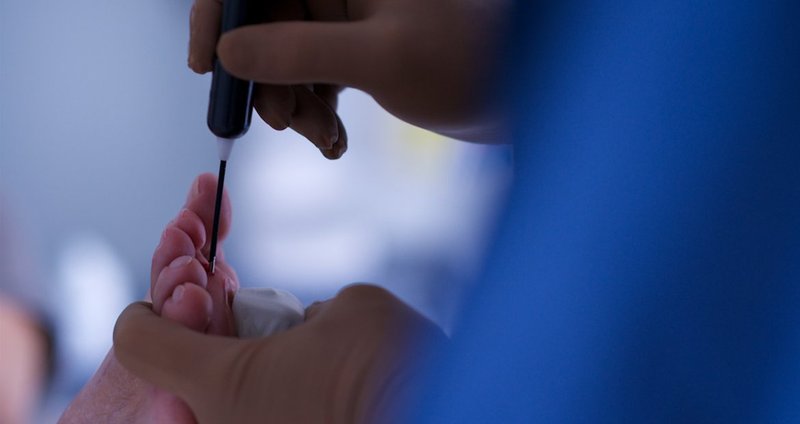
For most patients with a Morton's neuroma that has not previously been operated on, our first-choice treatment is cryosurgery (cryoablation) rather than open surgery.
Cryosurgery uses precisely controlled freezing to treat the affected nerve through a tiny 2–3mm entry point. Unlike a neurectomy, it preserves the nerve rather than removing it, the complication profile is low, and most patients return to normal footwear within days rather than weeks. It is carried out in clinic, and Mr McCulloch is a NICE Professional Expert on cryoablation for Morton's neuroma.
In practice, many people searching for "Morton's neuroma surgery" turn out to be ideal candidates for cryosurgery — they simply had not been told a minimally invasive option existed. Read more about cryosurgery for Morton's neuroma →
We also offer radiofrequency nerve release (ablative and pulsed) as a further non-surgical option where it is the better fit.
Have you already had Morton's neuroma surgery?
If you have had surgery and your pain has returned — or never fully resolved — you are not out of options. Pain after an operation is often caused by a stump neuroma or by scar tissue forming around the nerve, and these are different problems requiring different solutions:
- Neuromodulation (including the STiM Pod system and pulsed radiofrequency) is used for complex post-surgical nerve injuries, including stump neuroma and ongoing post-surgical nerve pain.
- Hydrodissection is used where scar tissue has formed around the nerve, releasing it without the need for further open surgery.
Post-surgical cases are genuinely complex, and they are an area in which we have particular experience.
Why patients choose The London Podiatry Centre
The London Podiatry Centre offers a comprehensive range of treatments for Morton’s neuroma, including cryosurgery, radiofrequency ablation and open neurectomy, alongside specialist assessment and treatment options for persistent pain following previous surgery.
Having access to a broad range of treatment options means that recommendations can be based on each patient’s individual symptoms, clinical findings, previous treatment and long-term needs.
The Centre is CQC-registered and has surgical facilities on site. We welcome patients from across the UK and internationally.
Patients wishing to use private medical insurance should contact our team before booking. Insurance cover and authorisation requirements vary according to the provider, policy, clinician and proposed treatment.