

Verrucae
Verruca Treatment at The London Podiatry Centre
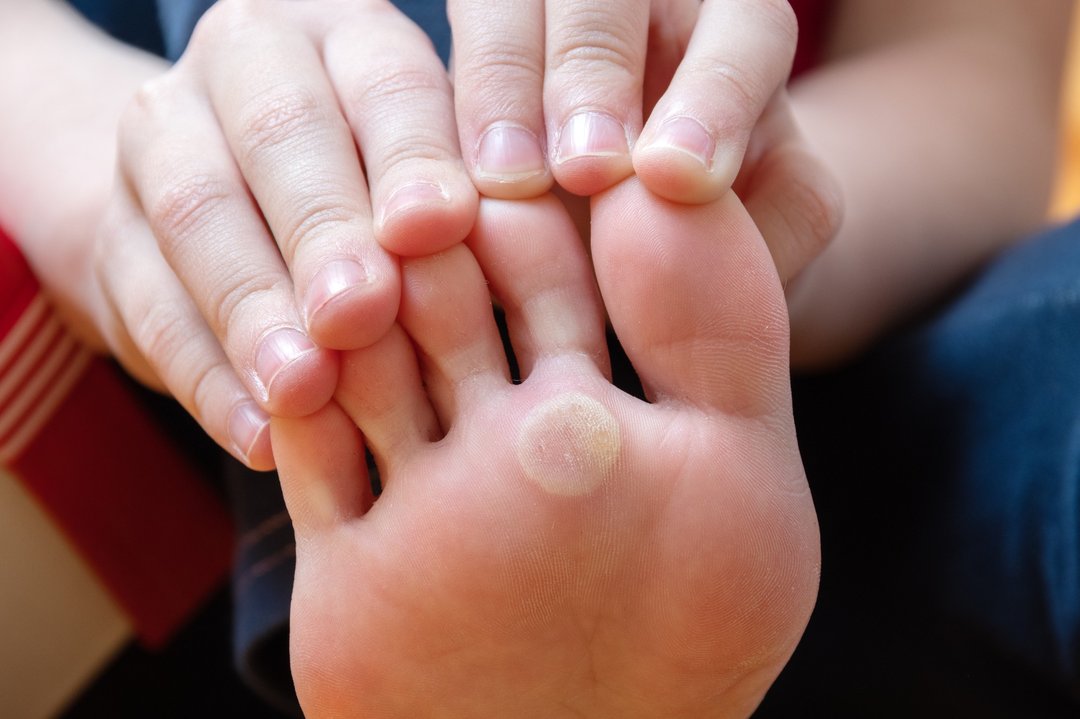
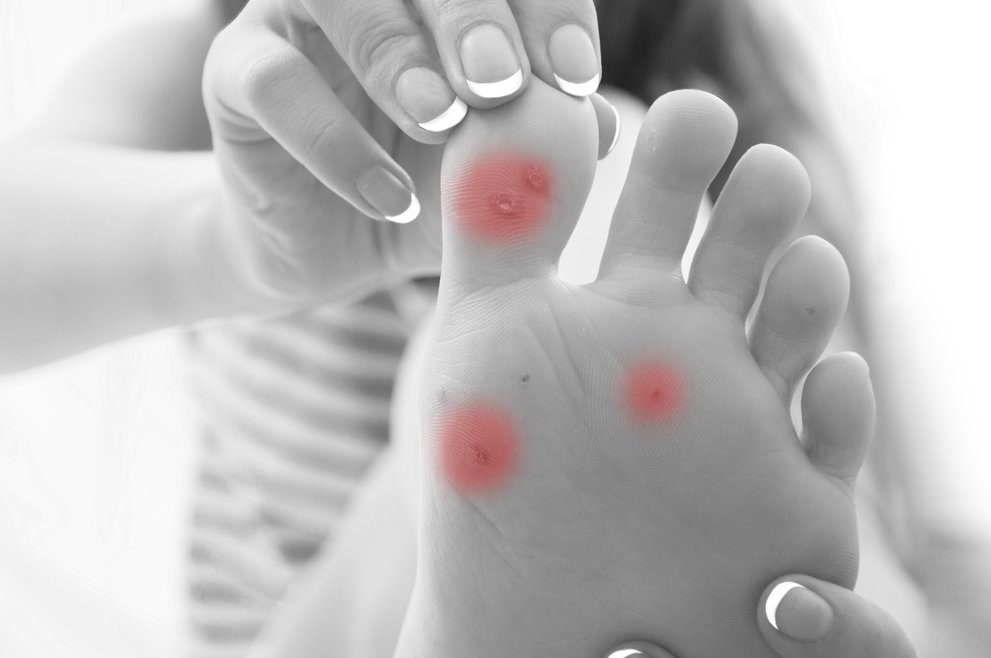
Verrucae (plantar warts) can be painful, stubborn and disruptive. We treat adults and children with verrucae (plantar warts), from simple cases to long-standing or painful lesions. Care is tailored to how long the lesion has been present, where it is, your activities, and (for children) what is age-appropriate and well tolerated.
Treatment options for verrucae
There is no single treatment that is appropriate for every verruca.
At The London Podiatry Centre, we offer a comprehensive range of treatment options, including liquid-nitrogen cryotherapy, Swift microwave therapy, dry needling and, in carefully selected cases, surgical treatment.
The treatment we recommend depends on the individual patient and the characteristics of the verruca, including its size, depth and location, how long it has been present, whether there is one lesion or several, previous treatments and the patient's medical history.
For example, cryotherapy may be particularly suitable for a small, well-defined verruca, whereas Swift or dry needling may be considered where there are multiple or particularly persistent lesions. Surgical treatment is generally reserved for carefully selected, resistant cases.
Our aim is not simply to provide “a verruca treatment”, but to identify the most appropriate approach for the particular verruca and the particular patient.
Why Choose The London Podiatry Centre for Verruca Treatment?
Why choose The London Podiatry Centre for verrucae?
- Multiple advanced treatments under one roof, from conservative care to surgery
- Consultant-led expertise in resistant and longstanding verrucae
- State-of-the-art equipment, including Swift and an on-site theatre
- Clear aftercare and pragmatic advice to reduce recurrence
Not sure if it’s a corn or a verruca?
They can look similar, see our Corns & Callus page; we’ll guide you to the right care.
Book an expert assessment at The London Podiatry Centre for a personalised treatment plan.
SELF-FUNDED APPOINTMENT
WITH A PODIATRIST
Understanding Verrucae and Choosing the Right Treatment
Verrucae can be surprisingly complex. Some disappear spontaneously, while others can remain for many years, become painful, spread or fail to respond to repeated treatment.
One of the most important things we have learned through treating both straightforward and particularly persistent verrucae is that there is no single treatment that is right for every patient.
The size, depth and location of the verruca, how long it has been present, previous treatment, the amount of overlying hard or fibrous tissue and the patient's age and medical history can all influence our recommendations.
Below, we explain why verrucae behave as they do, why treatments sometimes fail and how the different treatment options available at The London Podiatry Centre actually work.
MEDICAL INSURANCE APPOINTMENT
WITH MR MCCULLOCH
Verrucae: Frequently Asked Questions
Clear answers to common questions about verrucae, including what causes them, whether they go away on their own, how contagious they are and when treatment may be needed.

A verruca, also known as a plantar wart, is a viral skin lesion caused by certain types of the human papillomavirus (HPV).
Verrucae and warts on the hands are essentially the same type of skin infection. Verrucae often appear flatter because the pressure of standing and walking pushes the lesion into the skin.
No. A corn is caused by repeated pressure or friction, whereas a verruca is caused by a viral infection.
However, the two can sometimes look surprisingly similar, particularly when a verruca develops a substantial layer of hard skin.
An experienced practitioner can usually distinguish between them by considering the appearance and location of the lesion, the patient's history and the pattern of the normal skin lines. At The London Podiatry Centre, we can also use high-resolution diagnostic ultrasound in selected cases where additional information may be helpful.
Yes. Verrucae are caused by HPV and the virus can pass between people, although some individuals are considerably more susceptible than others.
Communal areas where people are barefoot, such as swimming pools, gyms and changing rooms, may provide an opportunity for transmission, particularly when the skin is wet or has tiny breaks in it.
However, it is usually impossible to establish exactly where an individual acquired a verruca.
Yes, they can. The body's immune system can eventually recognise the virus and eliminate the infection without treatment.
This appears to happen more readily in children. In adults, verrucae can sometimes be considerably more persistent and we regularly see patients with lesions that have been present for many years.
If a verruca is small, painless, not spreading and not causing concern, treatment may not always be necessary.
There is no single treatment that is best for every verruca.
At The London Podiatry Centre, treatment is selected according to factors including the patient's age and medical history, the size, depth and location of the verruca, how long it has been present, whether there is one lesion or several and which treatments have previously been tried.
Options include liquid-nitrogen cryotherapy, Swift microwave therapy, dry needling and, in carefully selected cases, surgical treatment.
The important principle is choosing the treatment for the individual patient and lesion rather than treating every verruca in exactly the same way.
Potentially, yes.
The effectiveness of liquid-nitrogen cryotherapy depends on more than simply applying liquid nitrogen to the surface of the verruca.
Longstanding lesions can have a substantial layer of overlying hard skin, which may need to be carefully reduced before treatment. The depth, duration and extent of the freeze are also important.
For this reason, previous unsuccessful cryotherapy does not necessarily mean that appropriately performed liquid-nitrogen treatment will also be unsuccessful.
This depends on the treatment.
Swift produces a brief but sometimes intense sensation of heat. Liquid-nitrogen cryotherapy can be uncomfortable during treatment and the area may remain sore or blister afterwards.
Dry needling and surgical procedures are performed under local anaesthetic, although some discomfort can occur once the anaesthetic wears off.
We take both the likely effectiveness and the tolerability of a treatment into account when recommending the most appropriate option.
Unfortunately, it isn't possible to give the same answer for every patient.
A small, isolated verruca may sometimes respond after one or two treatments, whereas numerous or longstanding verrucae may require a longer course of treatment.
HPV and the body's immune response are inherently variable, so we assess progress throughout treatment rather than promising a predetermined number of sessions.
In most cases, yes, although this depends on the treatment and the size and location of the verruca.
Following cryotherapy, the area can become sore and may blister, particularly after a substantial freeze. Recovery after dry needling or surgery depends on the procedure and whether the treated area is an important weight-bearing part of the foot.
We will explain any expected downtime or activity restrictions before treatment.
There are several possibilities.
With a large or deep verruca, some HPV-infected tissue may have survived the original treatment. Alternatively, the immune system may not yet have successfully recognised and eliminated the infection.
What appears to be a recurrence can therefore sometimes be persistence of the original infection.
If a verruca repeatedly returns or fails to improve, it may be appropriate to reconsider the treatment strategy rather than simply repeating the same treatment indefinitely.
We recommend professional assessment if a lesion is painful, changing, bleeding, spreading, interfering with walking or sport, or has persisted despite previous treatment.
Assessment is also worthwhile if you are unsure whether the lesion really is a verruca, as corns and some other skin lesions can occasionally look very similar.
Professional advice is particularly important before aggressive self-treatment if you have a medical condition affecting your circulation, sensation, immune system or wound healing.
No. Verrucae can behave very differently from one person to another, and it would not be appropriate to guarantee that any treatment will successfully eradicate the infection.
Some verrucae respond very quickly, while others can remain remarkably persistent despite several different approaches.
What The London Podiatry Centre can offer is extensive experience in managing verrucae, access to a broad range of treatment options and the ability to change the treatment strategy when a lesion is not responding as expected.
Cryotherapy
Cryotherapy uses extremely cold liquid nitrogen to freeze and damage HPV-infected tissue. It can be particularly suitable for smaller, well-defined verrucae and is one of the principal treatments used at The London Podiatry Centre. The effectiveness of treatment depends on factors including the depth and duration of the freeze and, where necessary, careful removal of overlying hard skin.
Cryotherapy involves treating the verruca with extremely cold liquid nitrogen, at approximately −196°C. Before treatment, any significant overlying hard skin may be carefully reduced so the liquid nitrogen can reach the verruca more effectively.
The liquid nitrogen is then applied directly to the lesion to create a controlled freeze. The aim is to damage the HPV-infected tissue, including the infected cells and their microscopic blood supply, while also triggering a local inflammatory response that may help the immune system recognise the infection.
The depth, duration and extent of the freeze are important. A more substantial treatment can result in greater soreness or blistering afterwards, but may also be more effective in appropriately selected verrucae.
Cryotherapy is a well-established treatment and can be particularly effective for smaller, well-defined verrucae that can be treated adequately in their entirety.
One of its advantages is that it directly damages and destroys HPV-infected tissue rather than relying solely on the immune system to recognise the virus. The resulting inflammation may also help stimulate a local immune response.
Cryotherapy can also be useful in patients who have previously had unsuccessful freezing elsewhere, as careful preparation of the lesion and an adequate depth and duration of freezing can make a significant difference to the effectiveness of treatment.
Cryotherapy can cause discomfort during treatment and the area may remain sore afterwards. Blistering is common following a substantial freeze and can occasionally be significant, particularly when treating a weight-bearing area.
Other possible effects include temporary swelling, inflammation and changes in skin colour. As with any treatment that deliberately damages tissue, there is also a potential risk of scarring.
However, in our extensive clinical experience at The London Podiatry Centre, clinically significant permanent scarring following appropriately performed liquid-nitrogen treatment has been exceptionally uncommon.
The likely level of discomfort and recovery will depend on the size and location of the verruca and the intensity of treatment, and this will be discussed with you beforehand.
Swift Microwave Therapy
Swift microwave therapy uses precisely controlled microwave energy to create a localised response within the verruca. Rather than simply attempting to destroy the entire lesion, Swift is principally designed to stimulate the body's immune response and help it recognise HPV-infected cells. It can be particularly useful for persistent or multiple verrucae.
Swift uses a small handheld probe to deliver a precise dose of microwave energy to the verruca. Applications take only seconds and are designed to stimulate a local immune response without cutting the skin. Most people can resume normal activities straight away, and dressings are typically not required.
- After assessment and consent, the skin is prepared and the Swift probe is applied in short, timed bursts (seconds per application).
- A sterile, single-use tip is used for each patient.
- Treatment is usually provided as a short course (commonly around three sessions about four weeks apart), tailored to your case.
- The sensation is a brief, sharp heat that settles quickly; injections are usually not needed.
- No wound care is typically required and you can walk out in your normal footwear.
- Follow-up appointments monitor progress and, if necessary, additional applications can be scheduled.
- Suitable for adults and, where appropriate, children—we’ll confirm suitability at assessment.
- Short, precise applications (measured in seconds) via a handheld probe
- Minimal downtime — most people resume normal activities the same day
- Usually no dressings or injections needed
- Evidence-based option for stubborn verrucae
- Targets the cause without cutting or freezing the skin
- Brief, sharp heat during treatment; temporary soreness may follow
- Redness, swelling or small blisters can occur and usually settle quickly
- Temporary skin discolouration is possible (more noticeable in darker skin tones)
- Multiple sessions may be required and results can vary
- Not suitable for everyone (e.g. certain implants or metal near the site); suitability is confirmed at assessment
Dry Needling for Verrucae
Dry needling is an immune-stimulating treatment performed under local anaesthetic. The verruca is repeatedly punctured with a sterile needle to disrupt HPV-infected tissue and expose viral material to the immune system. It may be considered for persistent or multiple verrucae, particularly where previous treatments have been unsuccessful.
Dry needling pushes the virus to the outer layer of skin (epidermis) into the deeper dermis layer of skin, aiming to induce a cell-mediate immune response that targets the verrucae virus directly.
- A local anaesthetic injection is administered to your ankle or in your foot to numb the skin and deeper tissues around the verrucae site.
- Once your foot is numb, a sterile needle is inserted into the verrucae several times until all of the surfaces of the verrucae has been punctured.
- A sterile dressing is then applied.
- Several follow-up appointments will be performed at later dates to ensure appropriate healing.
- Dry needling is a low-risk and effective treatment. Studies show that it works in 67-69% of cases (B. Longhurst, I. Bristow, 2013) which is higher than any other non-surgical verrucae treatment.
- It is different to other less invasive verrucae treatments, as it often only requires one or two treatments.
- The procedure can be carried out in the clinic, not requiring hospital admission.
- Infection
- Painful scar tissue formation
- Adverse reaction to local anaesthesia
- Recurrence or regression of the verrucae virus
- Chronic Regional Pain Syndrome (CRPS)
Controlled-Depth Excision for Verrucae
For those patients who have become resistant to both over-the-counter ointments and cryotherapy treatments, surgical options such as a controlled depth excision can be considered.
Controlled depth excision is a minor surgical procedure used to completely remove the verrucae from the surrounding healthy skin. As well as excising the verrucae lesion, the procedure attempts to induce a cell-mediated immune response is induced, to fight off the verrucae virus.
- A local anaesthetic injection is given around the ankle or in the foot to numb skin and deeper tissues around the verrucae site.
- Once your foot is numb, the verrucae is carefully excised between the dead and live layers of the skin, at what is known as the dermo-epidermal junction.
- The underlying skin is then cauterized using an electric needle, destroying any remaining viral tissue.
- Such procedures tend to bleed readily, therefore a large sterile dressing is then applied once the procedure is complete.
- Several follow up appointments will then be provided in the following weeks to ensure successful healing.
- Controlled depth excision is a low-risk and effective verrucae treatment.
- While more invasive than most other verrucae treatments, it can still be performed in our specialist day surgery facility, thus not requiring hospital admission.
Uncommon, but they can include:
- Adverse reaction to the local anaesthetic
- Infection
- Painful scar formation
- Recurrence or regression of the verrucae
- Thrombosis
- Chronic Regional Pain Syndrome (CRPS)